
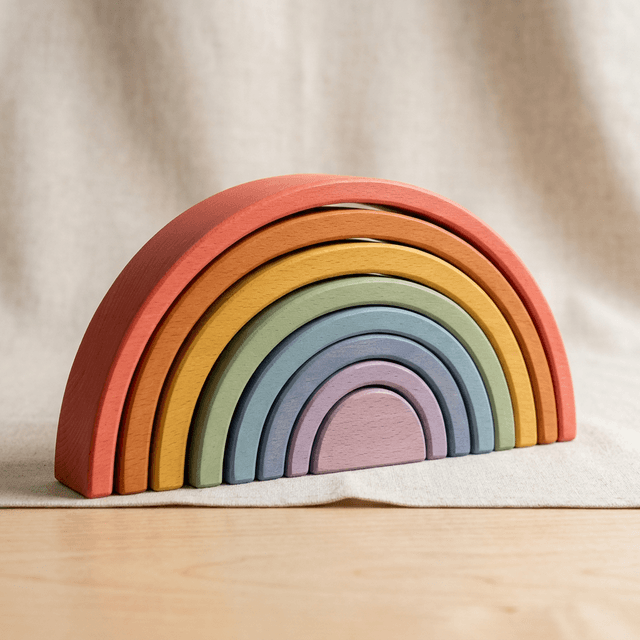
Walk down any modern toy aisle, and you'll find bright plastic boxes filled with toys that beep, flash, and speak. While these toys might capture attention momentarily, child developmental studies reveal a different truth: the more a toy does, the less the child does.
What is Open-Ended Play?
Open-ended play refers to play with no set rules, correct answers, or predefined outcomes. A cardboard box, a set of wooden building blocks, or a simple collection of magnetic geometric shapes can become a spaceship today, a medieval castle tomorrow, and a bustling kitchen the day after. There is no 'game over' screen or 'wrong way' to play.
"Simple toys make active minds. Complex toys make passive observers. Open-ended materials give children the freedom to build their own worlds."
Cognitive Development and Spatial Reasoning
When building with unstructured toys, children are constantly testing hypotheses. 'What happens if I place this triangle on a cylinder?' 'How high can I build this tower before it collapses?' These micro-decisions nurture early physics, spatial awareness, and problem-solving capabilities. They learn cause and effect firsthand through active, self-directed exploration.
Fostering Concentration and Resilience
Because open-ended play is self-motivated, children develop longer attention spans. They are not chasing external electronic rewards, but rather fulfilling their own creative visions. When a structure falls down, they aren't discouraged by a red 'fail' screen; they simply rebuild, learning resilience and adaptability in a safe, stress-free environment.

 United States